
Prof. Sohag Kabir
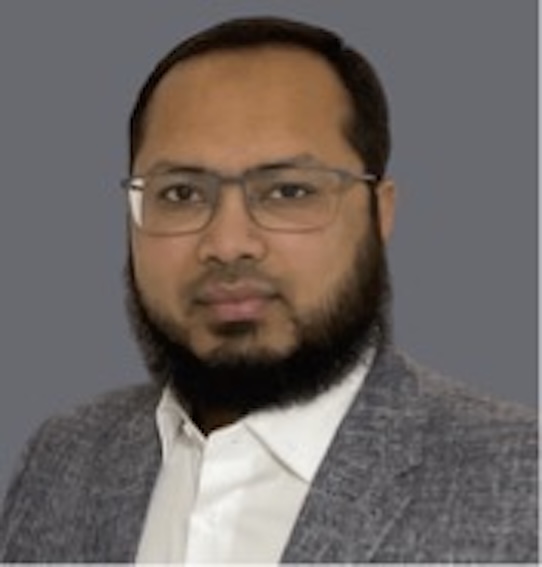
Associate Professor, School of Computer Science, AI, and Electronics, University of BradfordProgramme Leader for MSc Artificial Intelligence and Machine Learning, MSc Applied Computer Science and Artificial Intelligence, MSc Big Data Science and Technology Sohag Kabir is an Associate Professor in the School of Computer Science, Artificial Intelligence, and Electronics at the University of Bradford. He has been working in UK Higher Education since 2013 and is a Fellow of Advance HE. He leads three postgraduate programmes in computing and artificial intelligence, where he provides academic leadership and student support to ensure an enriching learning experience.Sohag’s research focuses on enhancing the safety, reliability, and security of autonomous cyber-physical systems—technologies that integrate computing with the physical world, such as robotics and smart infrastructure. He has contributed to UK Government, EU, and industry-funded projects and has collaborated with researchers and organisations across disciplines to build more resilient and trustworthy intelligent systems.Before joining the University of Bradford, Sohag worked at the University of Hull on an EU-funded project aimed at improving safety and reliability for complex technologies. His research work has received recognition in both academic and public spheres. In 2025, his research was highlighted in the local media (Telegraph & Argus). In 2023 and 2024, he was named among Stanford University's World's Top 2% Scientists. He has also won awards for research excellence from both the University of Bradford and the University of Hull.Born and raised in a village in Bangladesh, Sohag’s early experiences shaped his deep respect for education and its power to change lives. He earned his PhD in Computer Science and MSc in Embedded Systems from the University of Hull, and a BSc in Computer Science and Engineering from the Military Institute of Science and Technology. His journey continues to inspire his commitment to mentoring and empowering young people, especially those from underrepresented and disadvantaged backgrounds. Sectors worked in and routes taken: UK Higher Education After completing his PhD in 2016, he began working as a postdoctoral researcher at the University of Hull. In 2019, he joined the University of Bradford as a Lecturer. Bangladesh Higher Education He spent a year working as a Lecturer at a university in Bangladesh, where he taught undergraduate modules in Computer Programming and Software Engineering. What I would like to get involved in